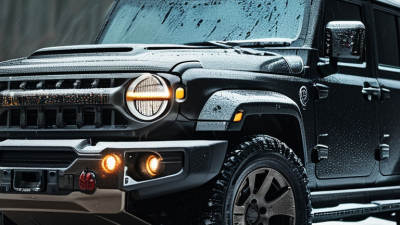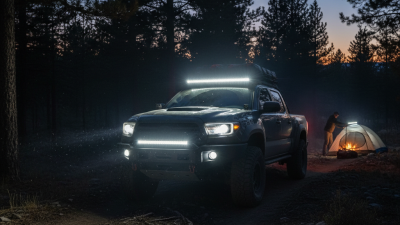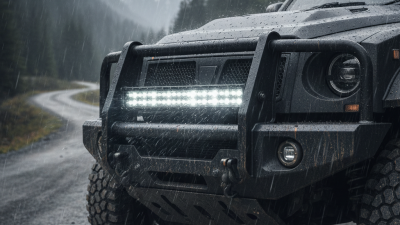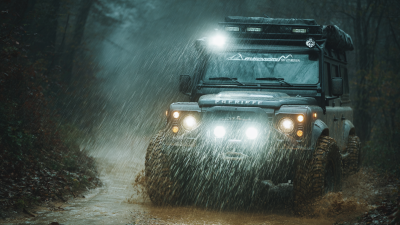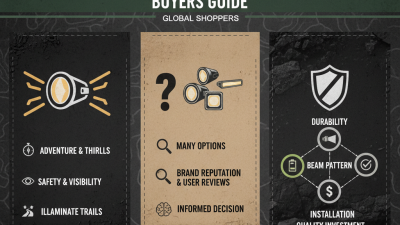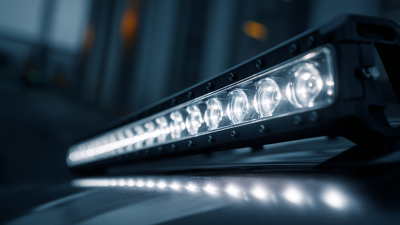
Choosing the right Off Road Led Light Bar isn't just about comparing brightness specs. You’ve gotta look at the bigger picture—things like how far the beam reaches, how the light spreads out, how tough the housing is, how much power it needs, and how easy it is to install. Even a super powerful light might fall flat if it causes glare or leaves dark spots around your vehicle. Trust me, those details can make a real difference.
In this guide, we’re breaking down some of the top off-road LED Light Bars based on real-world info. We pay attention to stuff like aluminum housing quality, sealed connectors to keep moisture out, thermal management features, vibration resistance, and water resistance. We also review different beam styles—spot, flood, or combo—for various vehicles like trucks, utility vans, farm equipment, or outdoor work rigs. The goal is to help you find products with clear specs, consistent performance, and easy-to-access technical info. Keep an eye on independent tests, certifications, and warranty details—that stuff really matters.
But here’s the thing: real-world conditions throw in some surprises. Dust can hide around the cooling fins, mud might cover the lens in no time, and if the wiring isn’t done right, you could see reduced output or face unnecessary maintenance headaches. It’s the small things that can trip you up. Before placing an order, double-check your vehicle’s voltage, mounting options, relay needs, and local lighting laws. No single light bar is perfect for every adventure or climate, so be cautious about those flashy performance numbers—many are based on lab tests under ideal conditions, not what you’ll face on rough trails. We need to be honest about that.
The best pick is one that offers decent brightness, stands up to rough use, runs efficiently, and is installed responsibly. This overview aims to help distributors, fleet managers, and even weekend warriors compare trustworthy options with a bit more confidence. Just keep in mind, it’s not a substitute for reading the manufacturer’s instructions or checking local regulations. At the end of the day, using good judgment is still your best tool.
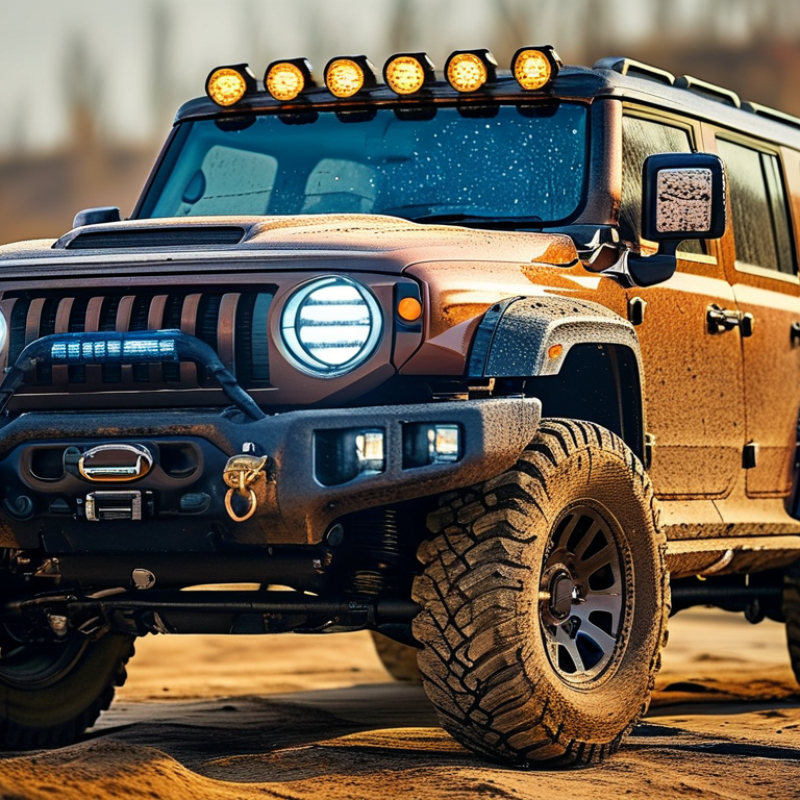
Off-road LED light barsare Auxiliary Lamps designed to improve visibility beyond standard headlights. They use multiple light-emitting diodes arranged behind reflectors or lenses. Electrical current passes through each diode, producing light with less heat than older halogen systems.
A flood beam spreads light across nearby ground, while a spot beam reaches farther along a trail. Combo patterns combine both effects. Beam choice matters more than appearance.
Most bars operate on 12-volt or 24-volt vehicle systems, but buyers should verify voltage compatibility before ordering. An aluminum housing helps transfer heat from the LEDs. Without effective cooling, brightness can decline over time.
Water and dust resistance ratings also deserve attention, especially for muddy routes and heavy rain. A rating should be verified through technical documents, not assumed from product photos.
Installation experience shows that good wiring prevents many failures. Use a correctly sized fuse, relay, sealed connectors, and a reliable ground point.
Mount the bar firmly, then aim it below eye level on public roads. Local lighting rules differ between countries and regions, so check them before driving.
I once focused too heavily on maximum lumens and overlooked glare control. That was a poor decision.
Real trail use rewards balanced illumination, secure mounting, and serviceable connections.
Shorter bars may fit compact vehicles better, while longer designs can cover a wider forward area. Differences in brackets and plug styles can also complicate international replacement.
Choosing the best off-road light bar starts with the terrain, not the highest lumen claim. The U.S. Department of Energy’s 2023 LED efficacy report notes that laboratory LED packages can exceed 200 lumens per watt. Real vehicles achieve less because of optics, heat, wiring, and dirt. A Led Light Bar 12v Off Road system should therefore provide a measured beam pattern, not impressive numbers alone.
Dusty trails need a wide beam with controlled glare. It helps drivers see rocks, branches, and sudden surface changes near the vehicle. In muddy conditions, sealed housing matters more than decorative styling.
IEC 60529 testing defines IP67 as protection against temporary water immersion, while IP69K adds resistance to high-pressure, high-temperature cleaning. These ratings are useful, but installers should verify test conditions and connector protection.
Fast desert routes require distance, stable thermal control, and a narrow driving beam. SAE J575 and J578 provide recognized methods for evaluating vehicle lighting durability and photometry. They do not guarantee perfect off-road performance. I still question raw lumen figures after seeing cheaper lamps lose output when heat builds. A practical check includes voltage drop, mounting vibration, glare, and beam spread at night. Small details matter. A slightly misaligned bar can illuminate dust instead of the trail.
Choosing the right off-road LED light bar starts with its design and beam pattern. A straight bar spreads light evenly across a broad area. It suits open trails, work sites, and slow technical driving. Curved bars follow the vehicle’s front profile and can reduce dark gaps near the corners. However, the improvement is not always dramatic.
Beam patterns affect visibility more than appearance. A flood beam creates a wide, soft field for nearby obstacles. A spot beam projects a narrow, longer ray for distant trail markers.
Combo designs blend both patterns and work well when terrain changes quickly. During field checks, I watch for glare from dust, wet rocks, and reflective signs. A powerful lamp can still perform poorly if its optics scatter light.
Tips: Match the beam to your speed and terrain. Check mounting strength, wiring protection, and heat control. An Off Road Led Light Bar With Strobe may suit approved emergency or warning applications, but local regulations differ. Use strobe functions only where legally permitted. Color temperature also deserves attention; very cool light looks bright, yet warmer light may reveal surface texture better. I once preferred maximum output, then noticed eye fatigue after long night drives. More light is not automatically better. Reliable testing should include vibration, rain exposure, connector sealing, and real driving angles, not only laboratory brightness figures.
Top Off Road LED Light Bars for Global Buyers
Choosing the right light bar starts with the vehicle, not the advertised lumen number. Measure the available mounting space, roof height, and wiring distance before shopping. A narrow, spot-beam bar suits fast trail driving and long sightlines. A flood beam spreads light across rocks, ditches, and nearby turns. Many drivers need both patterns. That choice is often overlooked.
Electrical load matters more than dramatic packaging. A 100-watt bar draws about 7.25 amps at 13.8 volts. Check the alternator’s spare capacity, fuse rating, relay quality, and cable size. The U.S. Department of Energy reports that LEDs use at least 75% less energy and can last up to 25 times longer than incandescent lighting. That benchmark is useful, but it does not prove a particular bar will survive vibration. I once trusted the lumen claim and ignored heat management. It was a poor decision.
For harsh routes, inspect the IP rating under IEC 60529. IP6X indicates dust-tight protection, while IPX8 depends on the maker’s stated immersion conditions. Ask for test records based on SAE J575, which addresses vibration, moisture, dust, and corrosion testing for vehicle lighting equipment. Look for sealed connectors, aluminum housing, replaceable brackets, and a clear warranty process. Also check color temperature; extremely blue light can create glare on dust and wet rocks. Mounting angle matters. A slightly downward tilt may improve usable visibility. Public-road rules differ worldwide, and off-road equipment may require covers or separate controls. Do not assume trail legality.
Compare typical nominal power by light-bar length for a 12-volt vehicle electrical system. Longer bars generally provide more light output but require more mounting space, stronger brackets, and greater electrical capacity.
Planning values use a consistent 6 watts per inch model: electrical current is calculated as power ÷ 12 volts. Always verify the actual wattage, current draw, beam pattern, IP rating, mounting dimensions, and vehicle charging capacity before installation.
Choosing the Best Off Road Led Light Bar starts with the vehicle, not the advertised lumen number. Measure the roof, grille, and available clearance before ordering. A 20-inch bar can still interfere with a bonnet, camera, or airflow. Mounting brackets should resist vibration and use locking nuts. I have seen loose hardware damage both the lamp and the vehicle.
Installation needs a protected electrical path. The U.S. Department of Energy reports that LED lighting uses at least 75% less energy than incandescent lighting and can last 25 times longer. That efficiency does not excuse poor wiring. Use a relay, place the fuse close to the battery, and select wire by current draw and cable length. Ground the circuit on clean metal. Waterproof connectors matter in mud, dust, and pressure washing. Check the lamp’s ingress rating under IEC 60529, but treat ratings as test conditions, not magic protection. SAE J575 testing also highlights the importance of vibration resistance for vehicle lighting.
Tips: Aim the beam on private land before driving. Keep it below eye level for nearby workers. Verify local road-use rules, switch isolation, and fuse access. Do not hide the fuse behind trim. My own weak point is rushing the final inspection; one loose ground can mimic a defective light. Recheck polarity, heat, cable rubbing, and bracket movement after the first rough drive.
| Light Bar Configuration | Typical Length | Nominal Voltage | Typical Power Range | Approx. Current at 12 V | Recommended Fuse | Wiring Requirement | Mounting Requirement | Installation Notes |
|---|---|---|---|---|---|---|---|---|
| Compact Single-Row Bar | 6–12 in (15–30 cm) | 9–32 V DC | 18–60 W | 1.5–5.0 A | 5–10 A | 16 AWG copper cable; relay recommended for switched installations | Two end or rear brackets; allow airflow around the housing | Suitable for motorcycles, compact utility vehicles, bumpers, and work areas. |
| Standard Single-Row Bar | 20–30 in (50–76 cm) | 9–32 V DC | 60–180 W | 5.0–15.0 A | 10–20 A | 14 AWG copper cable for shorter runs; use a relay and sealed fuse holder | Two or three adjustable brackets attached to a rigid mounting surface | A practical size for front bumpers, roof rails, and utility vehicle applications. |
| Dual-Row Bar | 20–50 in (50–127 cm) | 9–32 V DC | 120–360 W | 10.0–30.0 A | 15–40 A | 12 AWG copper cable is commonly required; use a correctly rated relay | At least two heavy-duty brackets; add a center support on longer bars | Higher power produces more heat and load; verify alternator and battery capacity. |
| Curved Roof-Mount Bar | 30–50 in (76–127 cm) | 9–32 V DC | 120–300 W | 10.0–25.0 A | 15–30 A | 12 AWG copper cable; route through protected conduit and a weatherproof grommet | Use vehicle-specific roof brackets or load-rated crossbars; avoid unsupported roof panels | Check roof clearance, wind noise, vehicle height, and local road-use regulations. |
| Spot-Beam Bar | 12–50 in (30–127 cm) | 9–32 V DC | 60–300 W | 5.0–25.0 A | 10–30 A | Choose cable size based on current and total circuit length; install a relay near the power source | Mount firmly and align the beam away from oncoming traffic | Designed for long-distance illumination; not normally used as a low-beam replacement. |
| Flood-Beam Bar | 12–50 in (30–127 cm) | 9–32 V DC | 60–300 W | 5.0–25.0 A | 10–30 A | Use fused power and an independent switch or relay circuit | Install on a rigid, vibration-resistant surface with adjustable side brackets | Provides a wider near-field pattern for work sites, trails, and low-speed maneuvering. |
| Combination-Beam Bar | 20–50 in (50–127 cm) | 9–32 V DC | 100–360 W | 8.3–30.0 A | 15–40 A | Use 12 AWG cable for higher-output models and protect all connections from moisture | Use multiple brackets and verify that the mounting surface can withstand vibration | Combines spot and flood optics for mixed-distance coverage; confirm beam pattern before final tightening. |
| Low-Profile Bar | 12–30 in (30–76 cm) | 9–32 V DC | 45–180 W | 3.8–15.0 A | 5–20 A | 14–16 AWG copper cable depending on output and cable length | Requires adequate clearance for connectors, heat dissipation, and bracket adjustment | Useful where reduced height and lower aerodynamic resistance are important. |
| 24 V Fleet-Use Bar | 20–50 in (50–127 cm) | 18–32 V DC | 120–360 W | 5.0–15.0 A at 24 V | 10–20 A | Confirm compatibility with the vehicle's 24 V electrical system; do not connect to 12 V accessories | Use corrosion-resistant hardware and vibration-resistant locking nuts | A 24 V system draws approximately half the current of a 12 V system at the same power. |
Safety starts with fitment, not maximum brightness. The U.S. Department of Energy reports that modern LED systems can exceed 100 lumens per watt. More light, however, can create dangerous glare when aimed incorrectly. NHTSA recorded 42,514 U.S. traffic deaths in 2022, reinforcing the need for disciplined road-use decisions. An OEM Off Road Led Light Bar should remain switched off on public roads unless local rules permit its use. In the United States, Federal Motor Vehicle Safety Standard 108 controls many lighting installations. European buyers should check UNECE Regulations R48 and R149. Approval in one market does not guarantee legality elsewhere. Verify mounting height, beam color, flashing functions, and required markings with local authorities.
Weather resistance also needs evidence. Under IEC 60529, IP67 means dust-tight protection and temporary immersion up to one metre for 30 minutes. IP68 depends on declared test conditions, so the number alone is incomplete. I have seen water enter through poorly sealed cable glands, not the lamp housing. Inspect those points after muddy trips. Check brackets, fasteners, wiring insulation, and lens damage before every long journey. Keep the beam aligned against a wall at night. Avoid high-pressure spray near connectors. A loose bracket can turn a reliable lamp into a hazard. My earlier assumption was simple: brighter meant better. Field use proved otherwise; controlled visibility matters more than impressive figures.
It is an auxiliary lamp with multiple LEDs behind lenses or reflectors. It extends visibility beyond standard headlights. Beam choice matters.
Flood beams illuminate nearby rocks, ditches, and turns. Spot beams reach farther along open trails. Combo beams provide both patterns.
Measure the mounting space, roof height, clearance, and wiring distance. Confirm the vehicle voltage before ordering. Small vehicles may need shorter bars.
A 100-watt bar uses about 7.25 amps at 13.8 volts. Check alternator capacity, fuse size, relay quality, and cable length.
Use a correctly sized fuse, relay, sealed connectors, and clean grounding. Place the fuse near the battery. Keep it accessible.
Choose aluminum housing, sealed connectors, and verified dust and water resistance. Look for vibration and corrosion test records. Photos prove little.
Mount it firmly with locking nuts and vibration-resistant brackets. Aim the beam slightly downward. Keep it below eye level near people.
Recheck polarity, cable rubbing, heat, loose brackets, and ground connections. Test it after the first rough drive. I often rush this step.
Road-use rules differ by country and region. Check local requirements for covers, controls, brightness, and mounting position. Trail permission is not road permission.
Do not judge only by advertised lumens. Consider beam pattern, heat control, mounting space, wiring, serviceability, and glare. I once ignored glare control. That was poor judgment.
An Off Road Led Light Bar is a powerful auxiliary lighting system designed to improve visibility on dark trails, remote roads, and challenging work sites. It uses multiple LED emitters, reflectors, and heat-management components to project concentrated or wide-area illumination. Buyers should compare brightness, beam distance, color temperature, efficiency, durability, weather resistance, and vibration protection according to driving conditions. Common designs include straight, curved, single-row, and multi-row bars, with spot, flood, combo, and scene beam patterns for different visibility needs.
Choosing the right light bar depends on vehicle size, available mounting space, electrical capacity, terrain, and desired coverage. Proper installation requires secure brackets, correctly sized wiring, suitable fuses, reliable switches, and sealed connections. Mounting position should protect the light from impacts while avoiding obstruction of essential vehicle equipment. Global buyers should also review local safety requirements, road-use restrictions, product certifications, and import specifications before purchase. Regular cleaning, connector inspection, fastener checks, and heat-management maintenance can help preserve performance and service life.